Blog

  • Can You Sue Someone for Lying About a Car Accident?

    Can You Sue Someone for Lying About a Car Accident?

    Any car accident has the potential to be a stressful, overwhelming experience. However, the aftermath of a collision becomes even more challenging when the other driver lies about the circumstances in an effort to get out of paying for the damage they caused. If you suffered injuries in a crash with another driver who denies responsibility, you might wonder, “Can you sue someone for lying about a car accident?

    If another driver was at fault for a car crash that injured you and lied about what happened, you can take legal action. You can file a lawsuit or make a claim against their insurance. With our lawyer’s help, you can collect evidence to prove the truth of the incident and show that the other driver was careless.

    You have the right to use the civil legal system to fight for the truth and the compensation you rightfully deserve. If you’ve been hurt in a crash and the other driver is wrongfully claiming you were to blame, don’t let them get away with it. Turn to the car accident lawyers at The Tadchiev Law Firm, P.C.

    Why Is the Other Driver Lying About the Car Accident?

    Drivers might lie about car accidents for various reasons. The most common reason, however, involves money. A driver who is responsible for an accident could be on the hook for multiple significant expenses, including:

    • Traffic fines
    • Towing fees
    • Repair costs
    • Rental expenses
    • Medical bills
    • Court costs
    • Attorney’s fees
    • Higher insurance rates

    Some drivers might also lie if they knowingly break the law and want to avoid criminal charges, arrest, or imprisonment. For instance, an at-fault driver might lie about:

    • Speeding – Excessive speed is a prevalent cause of car accidents and can be challenging to prove. This is precisely what the at-fault driver hopes for. While some areas have cameras to determine vehicle speeds, they aren’t available everywhere. Some claimants must rely on other types of evidence, like accident reconstruction reports, black box data, and skid marks, to prove speeding occurred.
    • Distractions – Distracted driving, especially while using a cell phone for texting or making calls, is a common issue that carries severe penalties in most jurisdictions. Other common driving distractions include eating, talking to passengers, and personal grooming.
    • Drowsy driving – Driving while severely fatigued can be just as dangerous as driving under the influence, causing thousands of traffic accidents, injuries, and deaths yearly.
    • Impaired driving – Drunk driving carries severe consequences across the country. Drivers who have consumed just one or two drinks might not be obviously impaired, so they might lie to avoid detection and arrest.

    Lying about fault in car accidents is a risky move. Lying on a police report is a crime that could lead to jail time if proven. Insurance companies also take lying seriously, and individuals who file false reports risk losing their coverage.

    How Can You Prove That the Other Driver Lied About the Car Accident?

    To establish that another driver lied, you need to present evidence showing that they were negligent and should have known that their negligence contributed to the accident. A lawyer can help you collect and preserve valuable evidence from various sources, such as:

    • Eyewitness statements – Testimony from witnesses who saw the accident could confirm your version of events and catch the other driver in their lie.
    • Videos – Cameras from local businesses, residential properties, dashboard cameras, or traffic-monitoring systems could have captured your crash on video.
    • The accident report – Police crash reports are often more objective than driver statements and commonly contain the investigating officer’s opinions regarding who was at fault. Keep in mind that the police do not have final say on civil liability for a crash. That’s ultimately up to the courts.
    • Photos – Pictures taken at the accident scene can provide valuable information about the circumstances and consequences of a wreck.
    • Expert testimony – A lawyer can help you obtain testimony from experts who can support your case, such as accident reconstruction specialists.

    The Importance of Having a Police Report

    Having a police report is crucial when filing a car accident claim. The police report serves as an official record of the incident with essential information about who was involved and the officer’s opinions about what happened. A police report is vital because it can provide the following:

    • Objective documentation – A police report offers an unbiased account of the accident, which can be valuable when presenting your case. The investigating officer usually gathers information from both parties, witnesses, and any available evidence at the scene to create a comprehensive report, which you can use to establish the facts and identify liable parties.
    • Support for your claim – Insurance companies rely heavily on police reports when assessing claims. In fact, most providers require you to submit police reports when you file an accident claim. These reports can substantiate your version of events and increase the likelihood that an insurer will approve your claim.
    • Legal evidence – If your case goes to court, a police report could serve as a critical piece of legal evidence. It provides documented, reliable information about the accident, which a judge or jury could review to establish fault in support of your claim for damages.
    • Witness information – Police reports often include the names and contact details of any witnesses to the accident. These individuals can provide vital testimony, corroborating your account of events and potentially tipping the scales in your favor.
    • Evidence of damages and injuries – Police reports often contain information on the extent of property damage and injuries sustained in the accident. This data can help you prove how much compensation you deserve for your medical expenses, lost wages, and other losses.

    How Our Car Accident Attorneys Can Help with Your Case

    The experienced Queens car accident attorneys at The Tadchiev Law Firm, P.C., can help you prove that the other driver was dishonest about their role in causing the accident and seek the maximum compensation you deserve for your losses. We can help you by collecting and analyzing evidence, working with experts, and negotiating with insurance companies from a position of strength. If necessary, we can also represent you in court, fighting for the justice you deserve every step of the way.

    We take an aggressive approach when dealing with dishonest drivers and penny-pinching insurance companies. We know all the underhanded tactics these parties use to shift blame and avoid paying their fair share, and our diligent team is prepared to fight back.

    Contact Our Queens Car Accident Lawyers

    If you suffered injuries in a car accident and the other driver lies about the circumstances, don’t let them get away with it. Instead, seek legal help immediately. The experienced Queens car accident attorneys at The Tadchiev Law Firm, P.C., are ready to pursue your insurance claim for you. We won’t hesitate to stand up for you in court if necessary.

    Call us today or contact us online for a free consultation to learn more about your legal options.


  • The Impact of Social Media on Personal Injury Claims

    The Impact of Social Media on Personal Injury Claims

    The use of social media has become common in our society. Platforms such as Facebook, Instagram, TikTok, and others provide new ways to communicate and stay in touch with family, friends, and the wider world. But being active on social media while pursuing a personal injury claim can have adverse consequences. The comments, photos, and videos that you post online may be used to challenge your credibility and discredit your claims.

    The Negative Effects of Using Social Media During Personal Injury Claims

    Social media platforms are powerful tools for connecting with others. But online posts, pictures, and videos may be taken out of context to contradict your statements or claims in a personal injury case and ultimately cost you money.

    Before posting anything online after an accident, consult an experienced Queens personal injury lawyer who can provide the guidance and legal knowledge to protect your rights throughout the claims process.

    Social Media’s Negative Impacts on Personal Injury Claims

    After an accident, staying off social media is essential until you resolve your claim. Any comments, photos, or videos you post on social media may serve as evidence in court.  When gathering evidence, insurance companies and lawyers may search social media accounts for evidence that suggests you are not as seriously injured as you claim or that the accident was your fault.

    For example, suppose you post pictures of yourself attending a concert with friends days or weeks after your accident. In that case, the insurance company might argue that the photos demonstrate that you are not as injured or traumatized as you claim.

    Similarly, suppose you post pictures or videos of yourself performing certain physical activities like running, hiking, or traveling on vacation. An insurance company could argue that your injuries are not as limiting as you claimed. Even if you make posts completely unrelated to the accident, the opposing lawyer or insurance company could still use them against you in court.

    Social media posts have played a role in many injury cases. Courts have ruled that some online posts are admissible evidence.

    Even if you believe your posts are private and secure, courts have determined that certain online information is not privileged and can be made public in a court of law. Anything you post online may be obtained and used to question your credibility and minimize or deny your claim. It’s essential to think twice before sharing anything online.

    Prejudice

    Social media posts can also introduce prejudice in a personal injury case. Insurance companies may use claimants’ online posts to discredit them and their claims. For example, insurance companies could use social media updates, photos, or videos to show that claimants engage in activities that paint them in a negative light.

    Additionally, any information on social media could be used against you. This can be especially damaging if a post contains inflammatory comments or images. It is best to take an extended break from being active on social media until you resolve your personal injury claim.

    Privacy

    Commenting on your claim on social media can compromise your privacy and confidentiality. Even if you delete a post, the other side could still access it with a subpoena and present it in court as evidence.

    Something as simple as a photo of a family vacation or a post expressing your joy at returning to work could serve as evidence that your injuries are not as severe as you claimed. That’s why you must stay mindful of what you post online when you have a personal injury case.

    In Conclusion: When You Don’t Need to Use Social Media?

    Limiting your social media use when filing a personal injury claim is a good idea. Staying off of social media altogether is an even better idea. Posting on social media can have severe consequences for your case. If avoiding all social media isn’t a realistic choice, be sure not to post anything personal. Do not accept friend requests from people who you do now know. One may be an investigator seeking to monitor your social media activity. Limit yourself to liking or sharing other people’s content.

    The safest option is to lock down your profiles and stop posting until you resolve your claim. It’s also good to caution friends and family about what they say or share about you online. Their posts could appear in court, too. It is always best to err on the side of caution and refrain from using social media when you have a personal injury claim. If you have questions about social media usage while in a personal injury lawsuit, you can get reliable answers from a personal injury attorney in Queens.

    Get the Help You Need from Our Experienced Queens Personal Injury Lawyers

    If you have grounds for a personal injury claim, the proper legal representation can increase your chances of obtaining the compensation you need for your losses. At The Tadchiev Law Firm, P.C., our injury attorneys are highly experienced and ready to guide you through the legal process from start to finish.

    Our team of Queens personal injury lawyers has the knowledge and experience to build a strong case on your behalf. We offer our clients personal attention and aggressive advocacy in our pursuit of maximum compensation on their behalf. We don’t charge a legal fee unless we secure compensation for you. Our clients don’t have to worry about the expense of standing up for their rights.

    Ready to find out what an experienced Queens personal injury lawyer can do for you? Then contact us today for a free legal consultation and learn what your case could be worth.

  • Coney Island Film Festival

    Coney Island Film Festival

    The Tadchiev Law Firm, P.C. is proud to sponsor Coney Island Film Festival. The mission of the Coney Island Film Festival is to bring people together to celebrate the power of independent film through cinema and the Coney Island experience, and to provide the South Brooklyn neighborhood of Coney Island, with an educational and cultural experience, that enriches the lives of its citizens and contributes to the local economy. We foster a place of connection for filmmakers to meet, share ideas, and develop professional relationships.

    For more information, visit their website here.

  • New York City’s Current E-Scooter Regulations for Your Safety

    New York City’s Current E-Scooter Regulations for Your Safety

    Are electric scooters legal in NYC? Can you ride an electric scooter on the sidewalk in NYC? Our attorneys will answer these questions and other queries you may have about NYC scooter laws and regulations.

    An e-scooter accident can change your life in the blink of an eye, potentially leaving you with debilitating wounds like a traumatic brain injury, a spinal cord injury, or serious burns. If you were struck by a motorist and seriously injured while riding an e-scooter in NYC, an experienced Queens personal injury lawyer with The Tadchiev Law Firm, P.C. can help you seek compensation to recover financially. If you were injured in a collision caused by an e-scooter, our attorneys also can determine who is financially liable for the accident.

    Our attorneys have years of experience handling vehicle accident claims and are prepared to seek maximum compensation for you if you have been seriously injured by someone else’s negligence. The Tadchiev Law Firm offers a free initial consultation to discuss your legal options. You pay no fees unless we win for you. For your no-obligation case review, contact us today.

    Image button for Infographics about NYC Electric Scooter Laws and Regulations for Your Safety

    What Is an Electric Scooter or E-Scooter?

    Since being made legal in New York City in June 2020, electric scooters and e-bikes have become common in New York City streets, with varying levels of skill and safe use among riders. Numerous e-scooter accidents and injuries have been reported, many involving pedestrians. More recently, additional injuries have been attributed to fires caused by the rechargeable lithium-ion batteries that power e-scooters and e-bikes.

    Electric scooters are two-wheeled vehicles that users typically rent to ride. Under New York state regulations, a legally operated e-scooter weighs less than 100 pounds and:

    • Has handlebars, a floorboard or a seat that can be stood or sat upon by the operator, and an electric motor. Riders typically stand on a narrow metal blade to operate e-scooters.
    • Can be powered by an electric motor
    • Has a maximum speed of no more than 20 miles per hour on a paved level surface when powered by an electric motor.

    NYC Electric Scooter Laws: Everything You Need to Know

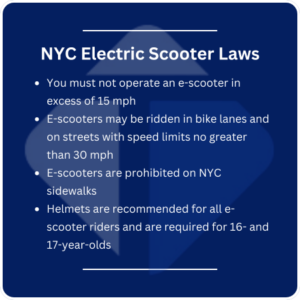
    New York City actually has very few regulations regarding the use of e-scooters. They are:NYC electric scooter laws

    • You must not operate an e-scooter in excess of 15 mph.
    • E-scooters may be ridden in bike lanes and on streets with speed limits no greater than 30 mph.
    • E-scooters are prohibited on NYC sidewalks.
    • Helmets are recommended for all e-scooter riders and are required for 16- and 17-year-olds.

    Riding E-Scooters in New York Parks: Regulations and Restrictions

    When in a New York City park, in addition to following city regulations – and not riding an e-scooter on the sidewalk, in particular – you should check signs or the city parks website for additional restrictions.

    For example, the High Line prohibits e-scooters along with bicycles, skateboards, and skates. But in New York City, there are currently no additional restrictions on riding e-scooters at Rockaway Beach and Boardwalk or at Flushing Meadows Corona Park.

    Stay Safe on Your E-Scooter: Top Tips for Riding in NYC

    The Consumer Product Safety Commission (CPSC) offers safety tips for riding e-scooters, including:

    • Wear a helmet to help prevent injury in falls and collisions. Knee and elbow pads are also helpful.
    • Check for damage to the scooter before riding. You could lose control of an e-scooter that did not work correctly because of damage.
    • Test the brakes. You need to know how to use the brakes, including how abruptly or how slowly they stop the e-scooter.
    • Ride alone. An e-scooter is for one rider. Additional riders can increase the risk and severity of collisions.
    • Keep both hands on the handlebars. Don’t hang or attach items to the handlebars.
    • Be alert to others who won’t be alert to you. E-scooters are small, quick, and silent, making it easy for other road users to overlook you. Slow down, look, and plan ahead. Do not make abrupt, unpredictable movements.
    • Avoid distractions while riding. Listening to music while riding an e-scooter reduces your ability to hear what is going on around you. Don’t talk on a cell phone, even if it’s a hands-free device.
    • Watch out for uneven surfaces, cracks, and debris in the road. Uneven pavement or debris can trip an e-scooter and throw you off of it.
    • Ride sober. Never ride under the influence of alcohol or drugs.

    NYC Fire and Burn Injury Danger From E-Scooter Batteries

    The New York Attorney General’s Office has published safety tips about the use of lithium-ion batteries, which power e-scooters and e-bikes. The NY Times says the batteries caused 216 fires in the city in 2022, with 147 injuries and six deaths. As of February 27, 2023, they were responsible for 30 fires, 40 injuries, and two deaths, according to the NYC Fire Department.

    Experts tell the newspaper that much of the fire and explosion risk is posed by off-market, refurbished, damaged, or improperly charged lithium-ion batteries. A chemical reaction inside the battery can spark a fire.

    The Attorney General suggests that you:

    • Buy your e-bike and battery from a trusted manufacturer.
    • Maintain your battery by carefully checking it from time to time.
    • Store your e-scooter in a safe place.
    • Charge your battery using only the cord and power adapter provided by the manufacturer.
    • Dispose of your battery at a battery-recycling location (find one here). Putting batteries in the trash or recycling them at home is unsafe and illegal.

    Involved in an E-Scooter Accident in NYC? Here’s What to Do

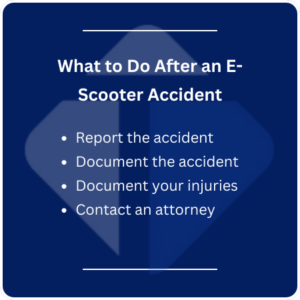
    what to do after an e scooter accidentIf you have been injured in an accident caused by an e-scooter owner or operator, you may have legal recourse to claim compensation for your medical expenses and other losses. As soon as you can, you should:

    • Report the accident. Call NYC police to report the accident. Ask how to get a copy of the police report, and get one as soon as possible. If the accident involves your motor vehicle, report it to your auto insurance carrier.
    • Document the accident. Take photos or video of the accident scene, your injuries, property damage, and anything else that will help depict what happened.
    • Document your injuries. If you are badly injured, call for an ambulance. Otherwise, see a doctor within 24 hours. There are many potentially serious injuries that do not exhibit symptoms right away.
    • Contact an attorney. If you have medical bills, lost work time, or other costs because of someone else’s negligence, a personal injury attorney can help you recover the compensation you are due.

    Contact Our Personal Injury Lawyers in Queens for Legal Assistance

    If you have been injured in an electric scooter accident in Queens, contact our personal injury attorneys at The Tadchiev Law Firm, P.C., today. We advocate for people who have been injured in e-scooter accidents to be fully compensated for their losses. We know how stressful an accident and dealing with injuries is, and we are ready to do everything we can to take the pressure off you. You can rely on us for the personalized service you deserve.

    Call us or reach out online now for your free consultation.

  • What Does “Yield the Right of Way” Mean?

    What Does “Yield the Right of Way” Mean?

    People learning to drive often hear about the concept of yielding the right of way. But what exactly does it mean to yield the right of way? In essence, the “yield the right of way” meaning is to graciously permit another vehicle, pedestrian, or cyclist to proceed through an intersection ahead of you.

    What Does “Yield the Right of Way” Mean

    The Queens accident attorneys of The Tadchiev Law Firm, P.C., can assist you if you have been injured in a car crash caused by someone who didn’t yield the right of way. Don’t hesitate to contact us if you believe you have been the victim of a failure to yield right of way accident. We offer a free case review to help you understand your legal rights.

    Yield the Right of Way Meaning

    Right-of-way rules determine which driver has the right to proceed and which motorist must wait.

    In some cases, traffic signs or signals require a motorist to yield the right of way to another vehicle or pedestrian. In other cases, a driver may have a duty under New York traffic laws to yield the right of way to others. For example, a driver approaching an intersection must yield to traffic already in the intersection.

    A driver yields the right of way when he or she slows or stops to allow another vehicle, cyclist, or pedestrian to proceed.

    Why Is Yielding Important?

    Yielding when required helps reduce the risk of accidents at intersections, road crossings, and access ramps. When vehicles approach from different directions, right-of-way rules determine which driver, cyclist, or pedestrian may proceed first. The rules help avoid confusion or mistakes that may lead to a collision.

    Some drivers fail to yield due to a misunderstanding of traffic laws and customs.

    Some failure to yield right of way accidents occur because of the following:

    Right of Way Laws in New York

    fail to yield the right of way finesNew York traffic laws set forth right-of-way rules for various situations drivers may encounter. State traffic laws require drivers to yield at triangular yield signs.
    Other right-of-way rules at intersections include:

    • Motorists must give the right of way to vehicular, bicycle, or pedestrian traffic in the intersection.
    • When two or more vehicles arrive at an intersection simultaneously, a driver turning left must yield to a driver turning right or proceeding straight.
    • When two vehicles arrive at a stop sign-controlled intersection from perpendicular directions, the driver on the right has the right of way.
    • Drivers entering a public road or highway from a private road or driveway must yield to approaching traffic on the road and pedestrians walking on the sidewalk.
    • Drivers must yield to pedestrians legally crossing at a crosswalk or intersection.
    • Motorists may not enter an intersection if their vehicle cannot clear the intersection before the light turns red.

    Right-of-way rules protecting emergency vehicles include:

    • Emergency vehicles with lights or sirens activated must be given the right of way, with traffic pulling to the right to clear a path for the emergency vehicle.
    • A driver in an intersection should clear the intersection before pulling over to yield for an approaching emergency vehicle.
    • Personal vehicles driven by volunteer firefighters, volunteer ambulances, and hazard vehicles such as snowplows may display warning lights. Drivers of these vehicles must obey right-of-way laws, although other motorists may choose to yield the right-of-way to these drivers as a matter of courtesy.

    Drivers approaching a roundabout must yield to traffic in the circle.

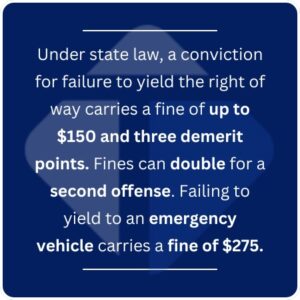
    Under state law, a conviction for failure to yield the right of way carries a fine of up to $150 and three demerit points. Fines can double for a second offense. Failing to yield to an emergency vehicle carries a fine of $275.

    Who Is At Fault for a Right of Way Accident?

    A driver who was legally required to yield the right of way but failed to do so would be at least partially at fault for a resulting accident. Drivers have an obligation to know and follow all right-of-way laws in New York. Violating traffic laws may constitute negligence on the part of a motorist.

    New York requires automobile owners to carry Personal Injury Protection insurance to protect them and their passengers in the event of an accident. Under New York law, each motorist would initially file a claim against their own insurance, regardless of who was a fault. PIP insurance provides coverage of medical bills and lost wages up to the limits of the no-fault policy.

    If a failure to yield right of way accident caused serious injuries, the injured person may have a right to file a claim against the at-fault driver’s insurance as well.

    The at-fault driver may be held financially liable for the following:

    • Medical and rehabilitation expenses
    • Ongoing and future losses of earnings and employment benefits
    • Long-term care costs for permanent disabilities
    • Pain and suffering
    • Emotional distress or trauma
    • Lost enjoyment and quality of life
    • Vehicle repair costs

    You can improve your chances of proving the other driver’s fault for the right-of-way accident by taking the following steps:

    • Report the accident to law enforcement
    • Exchange information with the other driver and get contact information from eyewitnesses
    • Document the accident scene by taking photos of vehicle damage, skid marks on the road, and traffic signs or signals
    • Notify your insurance company
    • Seek prompt medical attention and follow your healthcare provider’s treatment plan and instructions
    • Gather records for your case, including police accident reports, medical records, bills/invoices for expenses you incurred, and income statements if you missed time from work.

    Contact a Queens car accident lawyer as soon as possible to review the accident and get a clear understanding of your legal rights.

    Get in Touch with One of Our Car Accident Attorneys

    Were you hurt in an accident caused by a driver who failed to yield the right of way in New York City? Contact The Tadchiev Law Firm, P.C., today for a free, no-obligation consultation with our Queens car accident attorneys. Our firm is ready to help you pursue the full compensation available for the losses that you have suffered.

  • How Long Does It Take to Get a Settlement Check from a Car Accident in Queens?

    How Long Does It Take to Get a Settlement Check from a Car Accident in Queens?

    In New York, drivers and passengers may have several potential avenues for recovering compensation following a car accident. State law requires automobile owners to have a Personal Injury Protection (PIP) policy as part of their auto insurance coverage. Your PIP no-fault policy pays for your medical expenses and lost wages and those of your passengers, regardless of who was at fault in the collision.

    Those who suffer relatively minor injuries are limited to filing a claim against their own PIP insurance policy. However, people who suffer more serious injuries may pursue a legal claim against the at-fault driver for additional compensation.

    The Queens car accident attorneys at The Tadchiev Law Firm, P.C., can help you understand your legal options and the claims process as it applies to your accident. We offer a free consultation to review your accident. If you wish to speak with an experienced Queens personal injury attorney about your case, contact us today.

    Car Accident Settlement Timeline

    The settlement check timeline depends on whether you file a PIP claim against your own insurance or a third-party claim against another driver’s liability insurance.

    • File Claim with Personal Injury Protection Policy— The first step after an accident is to file a claim against your PIP policy. It should pay for your medical expenses, lost earnings, and certain other expenses up to the limits of the policy. No-fault insurance is designed to pay claims reasonably quickly.
    • Demand letter– If your injuries qualify as serious under New York law, your attorney may submit a demand letter to the at-fault driver’s auto insurance company. The demand letter will summarize your serious injuries, medical expenses, and losses suffered in the crash and demand a specific dollar amount to make you whole. You must have recovered sufficiently to have an accurate idea of the cost of your medical expenses and related losses.
    • Response – The insurance company will draft a response to your demand letter. In most cases, the insurer will acknowledge the demand letter and provide a timeline for when you can expect a formal response to your claim.
    • Review – The insurer will review the allegations and evidence in your demand letter. Based on an investigation of the car crash, the insurer will determine whether to accept or deny your claim. You may have the right to file an internal appeal of a denial if necessary. Alternatively, the insurance company may make a settlement offer if it accepts liability for your claim.
    • Settlement negotiations– Your attorney can negotiate with the insurance company to try to reach a settlement. Settlement negotiations often take months.
    • Payment of settlement– Once you and the insurance company agree on a settlement, the insurer usually will issue the settlement check within 30 days of execution of the written settlement agreement.

    How Are Car Accident Settlements Paid Out

    Car accident settlements are typically paid out in one of two ways:

    • Lump-sum settlement– This type of settlement pays the total dollar value of the settlement in one check. Lump-sum settlements will give you immediate access to the total value of the settlement, which can help you pay off debts such as medical bills and other expenses you were unable to pay if you missed time from work.
    • Structured settlement– This arrangement pays the settlement in monthly, quarterly, or annual payments. Structured settlements occur more frequently in larger settlements. Structured settlements also have the benefit of spreading out payments, which may have tax advantages. A settlement is a legally binding contract that you can legally enforce

    Estimated Time for Receiving a Settlement Check

    Once a settlement is reached, you generally can expect to receive a settlement check within four to six weeks. If you have an attorney, the check will be sent to the attorney. Your attorney will pay any medical liens on your behalf and deduct legal fees and expenses from the settlement funds per the terms of your contingency fee agreement. Your lawyer will send you the balance of the settlement, typically within a few days.

    Fighting for Fair Compensation in a Queens Car Accident

    Pursuing compensation after a car accident can be confusing due to New York’s no-fault insurance laws. You can only pursue compensation from another driver’s liability insurance policy if you meet the state’s eligibility criteria for a serious injury.

    Some injuries that qualify as serious include:

    Let the attorneys of The Tadchiev Law Firm, P.C., guide you through the accident claims process and help you seek a fair financial settlement. We will:

    • Explain your rights and options under New York’s no-fault insurance laws and evaluate whether you may have the right to file a third-party claim against the other driver’s insurance
    • Gather evidence and prepare a demand letter, including bills, invoices, receipts, medical records, and police accident reports
    • Communicate with the insurance company on your behalf, including responding when adjusters want additional information
    • Protect your interests if the insurance company attempts to rifle through your medical record looking for pre-existing injuries
    • File demand letters or requests for mediation or arbitration of your claims
    • Negotiate with the insurance companies to secure maximum compensation
    • Represent you in mediation, arbitration, or at trial and fight for the best possible result for you.

    Call Our Queens Car Accident Attorneys to Learn How We Can Help

    Contact The Tadchiev Law Firm, P.C., today to discuss your car accident and find out about the timeline that applies to resolving your case. We can help you demand prompt compensation from the insurance company after you have suffered serious injuries in a car crash that was not your fault. Call us today for a free, no-obligation consultation with our Queens car accident lawyers.

  • Should You Call the Police After a Fender Bender?

    Should You Call the Police After a Fender Bender?

    In New York City, fender benders happen often. Even if the accident seems small, it’s important to call the police and report it. This way, there’s an official record of what happened. Remember, New York law requires you to contact the police if someone is injured or passes away in an accident.

    Automobile owners in New York are required to have auto liability coverage to pay for the damage they cause to other vehicles. They also must have Personal Injury Protection insurance to pay for their own medical bills. After a fender bender, each driver initially files a claim against their own Personal Injury Protection insurance to cover their medical expenses, regardless of who caused the crash. No-fault insurance does not pay for auto repairs, however. You would need to file a claim against the at-fault driver’s liability insurance to cover damage to your vehicle in a fender bender.

    Having a police report documenting the accident can help with resolving the fender bender damage claim.

    The Tadchiev Law Firm, P.C. is here to help you navigate the accident claims process if you sustained injuries in a fender bender accident that wasn’t your fault. Contact us today for a free consultation.

    Filing a Claim for a Fender Bender Accident

    New York has “no-fault” laws for auto insurance policies. That means you must file your claim for medical expenses and certain other losses with your own personal injury protection (PIP) insurance. Although your PIP insurance will cover these costs up to your policy limits, you cannot receive compensation for non-monetary losses, such as pain and suffering or other emotional losses related to the fender bender accident.

    If you are supposed to report an accident and you don’t, you might face penalties. Usually, the penalty is a fine, but it can be jail time if someone gets hurt. It’s always a good idea to report a fender bender, even if nothing seems damaged and no one looks hurt.

    The damage to your vehicle should be covered by the at-fault driver’s auto liability insurance.

    What Is a Fender Bender Accident?

    A fender bender is a minor accident involving motor vehicles traveling at a slow speed in NYC traffic. The vehicles involved may have only a crumpled bumper or fender and be driven from the scene. Because of the low-speed impact, accidents typically do not result in serious injuries.

    Some examples of common fender-bender accidents are rear-ending another vehicle in slow-moving traffic or backing up into another vehicle in a parking lot. A fender bender may occur when a driver attempting to parallel park on the street hits a parked car.

    Because the vehicle damage is minimal and no one appears injured, many drivers question whether they should call the police and report the accident.

    Benefits of Filing a Police Report for a Minor Car Accident in Queens

    The driver who caused your fender bender accident may try to talk you out of calling the police. But reporting a minor accident may help if you need to file a claim against the at-fault driver’s insurance for vehicle repairs. When you notify the police of the accident, the New York police will create an official accident report. The police report will include information about the drivers, their insurance information, the circumstances of the accident, and statements of any witnesses or bystanders.

    Whether you are filing a claim with your insurance company or initiating a claim against the other driver, a police report is an essential record of the crash. Without a police report documenting the accident, it will simply be your word against the other driver as to what happened and who caused the fender bender.

    Difference Between Fender Bender vs. Serious Accident

    Any accident can negatively affect your life, but there are significant differences between a fender bender and a serious accident. By examining the losses and injuries sustained in a collision, you can distinguish between what would be considered a minor accident and a major accident.

    • Injuries– In a minor accident, there may be minimal or no injuries. In a major accident, the injuries are significant and may generate large medical bills.
    • Property Damage– The vehicle damage in a fender bender is often minimal. The car is drivable with some dents. In a major accident, the vehicles involved may be damaged beyond repair and no longer operable.
    • Other Losses– If you are temporarily or permanently disabled and have a substantial loss of income, the accident is more likely to be considered a major accident. If your injuries are serious, you may have a right to move beyond New York’s no-fault insurance system and file a personal injury lawsuit against the at-fault driver to recoup the costs of your medical bills and lost income

    The experienced car accident attorneys at The Tadchiev Law Firm, P.C., know how to handle any type of accident claim. Let us help you get back on the road to recovery.

    Common Minor Car Accident Injuries

    The injuries that result from a seemingly minor car accident can worsen over time and even prove to be debilitating. Victims who felt fine after the crash may later experience soreness or headaches requiring treatment.

    Some injuries that might occur in a minor accident include:

    • Whiplash
    • Neck pain
    • Limited motion in the neck
    • Muscle stiffness
    • Headaches
    • Numbness or tingling in extremities

    While some of these symptoms may resolve quickly, you should seek a medical evaluation after any accident, whether minor or major.

    What To Do After a Fender Bender Accident

    Remembering these helpful tips will make the process as smooth as possible.

    • Stop and call the police– Stop your vehicle or pull off to the side of the road if necessary. Call the police and wait for them to respond to the scene of the accident and prepare a police report.
    • Exchange information with the other driver– You should share your vehicle registration and insurance information with the other driver. Be sure to record the company name, policy number, and insurance company contact information.
    • Take photos– You can use your cell phone camera to take photos of the accident scene, your injuries, and the vehicles involved.
    • Call your insurance company– You should call your insurance company and report the accident promptly. The company will likely open a claim and request additional information from you.
    • Call a Queens car accident attorney– You should have an experienced attorney review your accident and discuss your legal options. If the accident is a fender bender with no injuries, you may be able to resolve the claim yourself.

    Get in Touch with Our Queens Car Accident Attorneys

    Contact The Tadchiev Law Firm, P.C., today and learn more about how to seek the compensation you deserve after you were injured in a motor vehicle accident that wasn’t your fault. Our car accident attorneys will talk to you about your accident and advise you about your legal options.

  • Is It Illegal To Pass On The Right in New York?

    Is It Illegal To Pass On The Right in New York?

    Passing on the right in New York is only allowed under certain circumstances, and it should be done only when necessary and safe. However, if you’ve been in an accident and sustained injuries due to someone improperly passing on the right, you need to contact an attorney.

    The Queens car accident attorneys at Tadchiev Law Firm, P.C. can help you pursue compensation for your losses after an accident caused by someone passing on the right. Contact us today to get started on your free case evaluation.

    When Can You Properly Pass on the Right in New York?

    You are allowed to pass on the right only under specific conditions, and it should be done solely when required and safe. Ensure caution when passing vehicles or switching lanes to avoid hazards, and only do so when essential. Remember, you should not surpass the speed limit while passing another vehicle.

    Some will argue that it is safer for drivers to pass other vehicles on the left because slower drivers expect faster drivers to pass them on that side. The state of New York, like many states, requires vehicles to stay to the right except when passing.

    But New York vehicle law also states that:

    The driver of a vehicle may overtake and pass upon the right of another vehicle only under the following conditions:

    1. When the vehicle overtaken is making or about to make a left turn

    2. Upon a street or highway with unobstructed pavement not occupied by parked vehicles of sufficient width for two or more lines of moving vehicles in each direction

    3. Upon a one-way street, or any roadway on which traffic is restricted to one direction of movement, where the roadway is free from obstructions and of sufficient width for two or more lines of moving vehicles.

    The law says, “The driver of a vehicle may overtake and pass another vehicle upon the right only under conditions permitting such movement in safety.”

    Penalties for Illegally Passing on the Right in New York

    penalties for illegally passing on the rightBecause passing on the right is illegal in many instances, it’s good to review penalties for illegal passing. A conviction for improper passing in New York may be punished by:
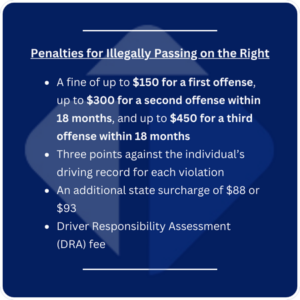
    • A fine of up to $150 for a first offense, up to $300 for a second offense within 18 months, and up to $450 for a third offense within 18 months
    • Three points against the individual’s driving record for each violation. Points typically lead to higher car insurance premiums.
    • An additional state surcharge of $88 or $93, depending on whether the ticket was issued in a city or town/village
    • Driver Responsibility Assessment (DRA) fee, which applies for any conviction resulting in six or more points on your driving record within 18 months. The fee is $300 plus $75 for each point over six.

    Should I Pass on the Left More Often?

    New York’s driver’s manual says, “When you pass other vehicles …, do so with caution and only when necessary. You must not exceed the speed limit to pass another vehicle.”

    Here’s how to pass on the left, according to the DMV:

    • If conditions are correct to pass, check your mirrors and signal your lane change.
    • Before you pull into the left lane, look quickly over your left shoulder, through the back side window, to make sure there is no vehicle close behind you in the left lane. Never depend on your mirrors when you prepare to change lanes.
    • When you pass, move completely into the left lane.
    • Before you return to the right lane, signal and look at your interior rear-view mirror to make sure you can see the front bumper of the vehicle you passed.
    • Look quickly over your right shoulder to make sure that you can see at least several feet of pavement between your vehicle and the one you passed.
    • Then return to the right lane.

    Do not attempt to pass a vehicle on the left if:

    • Your lane has a solid yellow center line.
    • You cannot safely return to the right lane before you reach a solid yellow center line for the right lane.
    • You cannot safely return to the right lane before any oncoming vehicle comes within 200 feet of you.
    • You approach a curve or the top of a hill on a two-way road and cannot see around or over it.
    • You are within 100 feet of a railroad crossing on a two-way roadway.
    • You are within 100 feet of a bridge, tunnel, or viaduct on a two-way road and your view is obstructed.
    • You will interfere with oncoming traffic.

    Talk to Our Seasoned Car Accident Lawyers in Queens, NY

    If you have been injured or lost a loved one in a car accident in Queens, NY caused by someone who was passing improperly, we urge you to contact a Queens car accident lawyer at The Tadchiev Law Firm. If your injuries are significant, you may be eligible to seek compensation for your medical bills, lost wages, pain and suffering, and more. Our legal team can investigate the circumstances of the accident, and if someone else was at fault, hold them accountable.

    The Tadchiev Law Firm, P.C., is committed to seeking maximum compensation for people who have been hurt in serious car accidents. Contact us today for a free case review and to answer any questions you have. We charge no fees unless we recover compensation for you.

  • How To Get Compensation for Pain and Suffering in Queens

    How To Get Compensation for Pain and Suffering in Queens

    If your insurance claim after a car accident in New York City progresses to the point of a personal injury lawsuit, you may seek compensation, or damages, for your pain and suffering after the accident. This could be a considerable amount of money, depending on your injuries. If your case goes to trial, a jury decides whether to award compensation for pain and suffering.

    At The Tadchiev Law Firm, P.C., we are committed to helping people who have been seriously injured in car accidents in Queens, NY, seek all the compensation available for injuries caused by others’ negligence. We are aggressive advocates for car accident victims in Queens.

    For a free review of what your car accident claim may be worth, contact us today.

    New York’s No-Fault Car Accident Claims

    New York is a no-fault car insurance state. Car owners must maintain a Personal Injury Protection no-fault insurance policy that covers their medical bills after an automobile accident, regardless of who was at fault. If an individual has suffered a serious injury in a car accident, the injured person may be eligible to file a claim against the at-fault driver’s auto liability insurance to recover additional compensation for their medical expenses and vehicle damage.

    If an appropriate insurance settlement cannot be reached, the injured person may file a personal injury lawsuit and pursue compensation for medical expenses, lost income, and pain and suffering.

    To prevail in a personal injury lawsuit, the injured person must provide evidence that the other driver’s negligence or disregard for safety led to the accident. A lawsuit for pain and suffering may be settled through negotiations with the insurance company that provides liability coverage to the at-fault driver or resolved in court with a jury’s verdict.

    What Are Pain and Suffering Damages in New York?

    When an injured person recovers compensation through a car accident lawsuit, they may be awarded economic and noneconomic damages.

    Economic damages are compensation for losses that can be specifically quantified, such as medical expenses, lost wages, and the cost of vehicle repairs. We can make a full accounting of your doctor’s bills and other medical expenses, for example, as part of the evidence submitted to support your claim.

    Noneconomic damages are awarded for losses that are not as easily quantified. New York personal injury law recognizes that when someone has harmed you through negligence, recklessness, or criminal intent, they may be compelled by the courts to compensate you for your pain and suffering.

    Pain and suffering encompass the physical pain, emotional anguish, inconvenience, and emotional trauma that may accompany a serious injury. In New York, the term “pain and suffering” includes the loss of enjoyment of life. Damages for the loss of enjoyment of life compensate for the frustration and anguish the individual suffers due to their inability to participate in activities that once brought pleasure.

    How Can I Prove My Pain and Suffering After a Car Accident?

    Because noneconomic damages cannot be quantified, our task as your car accident attorneys is to persuade a jury or insurance adjustor of the pain and suffering you have endured since the accident.

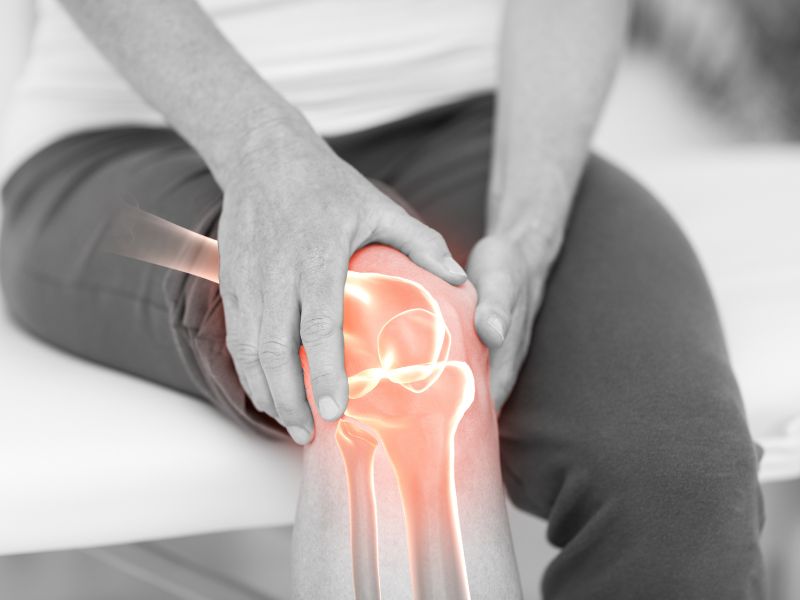
    We would look first at your injuries. The more severe your injuries are, the more painful they are likely to be. For example, one accounting includes a broken leg, slipped disk, and third-degree burns among the most painful injuries a person can experience. Some injuries are disabling and life-altering and therefore warrant compensation for permanent loss of enjoyment of life.

    We would use your medical records and statements from your doctors to explain the extent of your injuries, your prognosis, and what you will go through to live with permanent injuries.

    Second, we would ask you to keep a journal as you go through medical treatment for your injuries. In addition to a record of your physical and mental pain, you could note how your injuries have affected your life, such as activities you can no longer participate in or special family occasions you missed because of your injuries. This record can be part of your statement provided as evidence of the pain and suffering damages you deserve.

    Third, we would speak with you, your family, friends, and colleagues to learn how your injuries have changed your life. Some of the cases we deal with involve traumatic brain injuries that change the victim’s personality, effectively taking them away from their spouse and children. Statements or testimony from your loved ones can speak to the losses you – and your family – have suffered because of a car accident.

    How To Quantify Pain And Suffering Damages

    In the end, how much you deserve for pain and suffering after a car accident is a judgment call.

    If we can negotiate a settlement, your pain and suffering damages will be a figure the at-fault driver’s insurance company has agreed to pay and that you, our client, have found acceptable.

    A negotiated settlement is possible any time before a jury returns a verdict. We would present to you any settlement offer we receive along with our recommendation as to whether the offer is reasonable. The decision to accept or reject any offer would be yours.

    If your lawsuit goes to trial, the jury will render a verdict and state what damages it awards you, if any.

    When deciding noneconomic damages, a jury or insurance company typically uses one of two methods:

    • Multiplier method. This involves multiplying all of the claimant’s economic damages by a factor that typically ranges from 1.5 to 5 to calculate an amount of compensation for pain and suffering. The more severe your injuries and/or their lasting repercussions, the higher the multiplier.
    • Per diem method. This involves establishing a daily, monetary rate and multiplying it by the number of days you needed to recover from your injuries and the length of time your injuries will continue to affect your life. The rate would typically be based on your daily earnings.

    These are only tools for calculation. There may be several factors we could introduce to include in calculations for the pain and suffering damages you should be awarded. We are skilled negotiators and litigators who know how to build and present a persuasive case.

    Contact Our Experienced Queens Car Accident Attorneys

    The Queens car accident attorneys of The Tadchiev Law Firm, P.C., are available to review your accident and discuss your legal options, including potential damages you may seek for pain and suffering. We can investigate your car accident and help you pursue maximum compensation for your losses.

    Let us help you obtain justice for the pain and suffering a negligent driver has caused you and for your loss of enjoyment of life. Our initial consultation about your car accident claim is free. We don’t charge fees unless we recover money for you. Contact us today.

  • Why Driving At Night Is So Dangerous

    Why Driving At Night Is So Dangerous

    After Daylight Saving Time ends on Sunday, Nov. 6, many New Yorkers will find themselves spending more time driving in the dark. As nighttime driving increases, we brace for an increase in car, truck, and motorcycle accidents in Queens, NY. Driving at night is more dangerous than daytime driving for several reasons.

    Darkness creates less time to react to a hazard in the road ahead, especially when driving at higher speeds, the National Safety Council (NSC) explains. Headlights provide only about 250 feet worth of illumination (500 with high beams), which is far less than what drivers can see in clear daylight. Drivers at night have less time to recognize dangerous situations and react to avoid an accident.

    Headlights obviously reduce nighttime crashes, but according to the Insurance Institute for Highway Safety (IIHS), vehicle testing shows that visibility provided by headlights varies widely. Only about 1 in 3 headlight systems the IIHS tested on model year 2022 vehicles earned a good rating. About 40 percent of the systems tested were rated marginal or poor because of inadequate visibility, excessive glare from low beams for oncoming drivers, or both.

    Common Causes of Nighttime Car Accidents

    While we do only about a quarter of our driving at night, half of traffic deaths happen at night, the NSC says.

    Night driving is dangerous because of the reduced visibility of the road ahead and on the sides. It is advisable to maintain a slower speed than you would during the daytime, particularly in unfamiliar areas or on narrow roads with multiple turns. Your headlights will illuminate up to approximately 350 feet in front of your vehicle, so it is crucial to be attentive and maintain a safe distance from other cars on the road. The indivudal elements that makes nighttime driving dangerous are listed below:

    • Compromised vision. Our eyes take several hours to fully adapt to darkness and reach optimal sensitivity to low light conditions. But our vision makes large adjustments quickly, which convinces us that our vision is no longer compromised. Nighttime glare from oncoming headlights and other light sources reduces the distance that drivers can see and increases drivers’ reaction times until their vision recovers.
    • Fatigue. Our natural circadian rhythms make our bodies sleepy at night and in darkness. A National Sleep Foundation says any driver can become fatigued, but young people are at the highest risk for drowsy driving — especially males under the age of 26. It says 55 percent of drowsy driving crashes involve drivers under 25 years old.
    • Rush hour traffic. During fall, the evening commute takes place just as it begins to get dark and the sun is positioned in the sky to cause maximum glare. During winter, bumper-to-bumper rush-hour traffic takes place in darkness. In addition to having a reduced field of vision, drivers in the evening rush hour are fatigued. Rush-hour traffic congestion makes rear-end accidents and sideswipes more likely.
    • Shift work. Late-night traffic can be dangerous too. Car and Driver magazine recently quoted a Cleveland Clinic study that says shift work sleep disorder (SWSD) commonly affects people who work through the night – the graveyard shift – instead of at a traditional nine-to-five job. It says about 20 percent of the full-time workforce in the U.S. does some sort of shift work. Among them, 10 to 40 percent may suffer from sleep disorders. Researchers at the University of Missouri reported that people with shift work sleep disorder are 300 percent more likely to be in a crash or a near crash.
    • Speeding. As the hour grows later and traffic clears, drivers tend to increase their speed and commit other acts of aggressive driving. Speeding, in particular, gives drivers less opportunity to react in dangerous situations and decreases the effectiveness of braking or swerving to avoid a collision.
    • Alcohol and drug impairment. Impaired drivers are most frequently on the road after dark – particularly between the hours of midnight and 3 a.m. on weekends, the NSC says. The rate of alcohol impairment among drivers involved in fatal crashes in 2020 was 3.1 times higher at night than during the day, the National Highway Traffic Safety Administration says. While drunk driving has declined by about one-third since 2007, the number of drivers under the influence of drugs – particularly THC, the active ingredient in marijuana – has increased, the NSC says.

    Night Driving Safety Tips

    If you have been injured in a car, truck, or motorcycle accident in Queens, The Tadchiev Law Firm, P.C. can help you file a claim to seek compensation for your losses. New Yorkers typically must turn first to their Personal Injury Protection no-fault insurance for coverage of injuries. It pays regardless of who caused the accident.

    The AAA travel club and the NSC offer these nighttime driving tips:

    • Don’t follow too closely. To give yourself plenty of stopping time, slow down and increase the typical distance between your vehicle and the car you are following.
    • In rush hour traffic, stay in your lane and beware of drivers who dart from lane to lane. Even though the route may be familiar, don’t go on autopilot. Stay alert.
    • Minimize distractions, such as talking on the phone or with passengers.
    • Don’t look directly into oncoming headlights. As a vehicle approaches, look down toward the right side of the road and follow the lane marking to stay on course until it passes. If you wear glasses, make sure they’re anti-reflective.
    • Adjust your headlights. Headlights can sometimes be uneven or pointed too low. You can adjust them yourself or take your car to a garage. If you have an older car with plastic lens covers that have yellowed, use a polish kit to remove the residue.
    • Dim your dashboard lights. The glow from your car’s instrument panel and infotainment system can be distracting. It can also cause reflections on the windshield that make it tougher for your eyes to adjust to the darkness outside the car.
    • Clean your windshield. Light reflected at night can reveal dirty streaks on your windshield that aren’t visible in the daylight. Wipe the inside of the glass with a microfiber cloth and glass cleaner.
    • Act your age. As we get older, our field of vision shrinks. Over time, our pupils get smaller and don’t dilate as well, so our eyes at age 60 need three times as much light to see as they did at age 20. To compensate, older drivers should scan farther down the road and be certain to move their heads, not just their eyes, to make up for reduced peripheral vision.

    Contact Our Car Accident Lawyers Today

    If you have been injured in a car accident at night in Queens, NY, a car accident lawyer at The Tadchiev Law Firm is available to discuss your accident and legal options. We charge no fees unless we secure compensation for you. We offer a free case review to discuss any questions you may have. For your free case review, call us today or reach out online.